Choosing an Off Grid Solar Ev Charger is no longer a niche decision for remote homes, farms, and adventure sites. The International Energy Agency’s Global EV Outlook 2024 reported nearly 14 million electric cars sold worldwide in 2023. Electric cars represented about one in five new vehicle sales. That growth creates a practical question: where will charging energy come from when the grid is weak, distant, or unavailable?
Fatih Birol, Executive Director of the International Energy Agency, said, “The age of clean energy is dawning faster than many people think.” His observation supports the wider shift toward distributed energy, although it does not remove technical limits. The IEA’s Renewables 2023 report identified solar power as the fastest-growing renewable technology. Meanwhile, the U.S. National Renewable Energy Laboratory has highlighted the importance of charging load management, battery storage, and site-specific power planning. A solar charger is not simply a panel beside a parking space. It may include photovoltaic modules, an inverter, a battery bank, protection equipment, and a controlled charging unit.
Real-world performance can be uneven. A dusty panel, a shaded driveway, or three cloudy days can reduce charging output sharply. That detail is easy to overlook. Our 2026 buying guide examines charging speed, battery capacity, solar efficiency, weather resistance, installation complexity, safety features, and total ownership cost. It also questions optimistic marketing claims. The best Off Grid Solar Ev Charger is not always the most powerful model. It is the system that matches your vehicle, climate, daily mileage, and available sunlight.
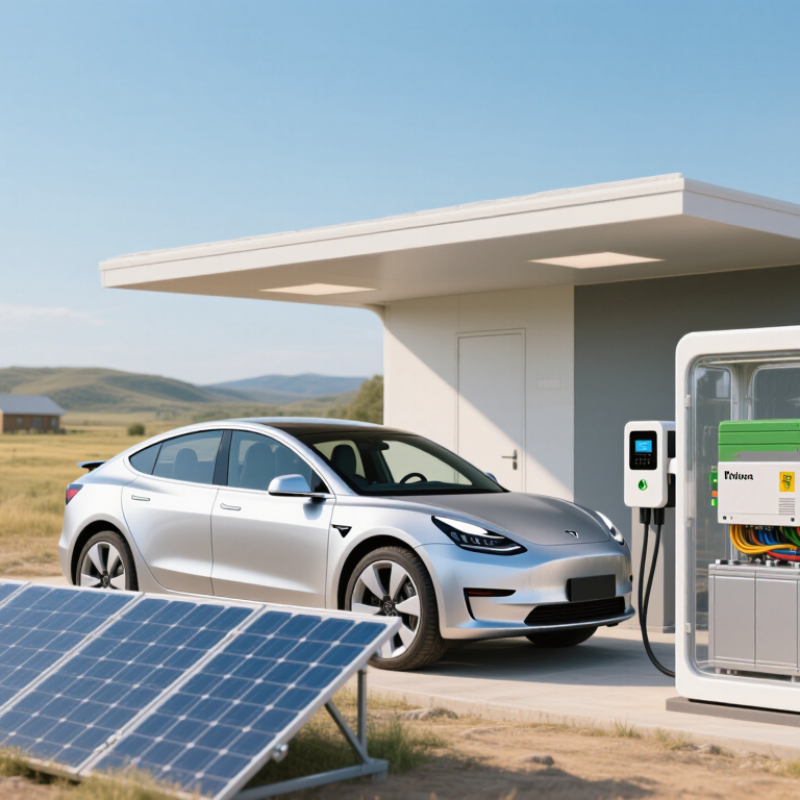
2026 Best Off Grid Solar EV Charger Buying Guide
Define Off-Grid Charging Demand Using a Typical 60-kWh EV Battery
A 60-kWh battery does not mean every charging session needs 60 kWh. The IEA Global EV Outlook 2024 reports typical electric-car consumption near 15–20 kWh per 100 kilometers. A 60-kWh pack may therefore provide roughly 300–400 kilometers under controlled conditions. Weather, speed, heating, and battery reserves reduce that estimate.
A full recharge also loses energy. With approximately 10–15% charging and conversion losses, the solar system may need to produce 67–71 kWh. Add a practical safety margin, and 75 kWh becomes a more credible design target. That figure is substantial for an off-grid site. With four effective sun-hours and 75% system efficiency, roughly 25 kW of solar capacity could be required for a same-day full recharge.
Most owners need less. A 50-kilometer daily commute may consume 8–10 kWh, based on IEA efficiency ranges. After losses, the charger should supply about 10–12 kWh daily. A 4–5 kW solar array can often support that demand, depending on local solar conditions. Battery storage remains important for evening charging and cloudy periods. Real life is messier. A neat spreadsheet can still mislead.
The IEA also projects global EV electricity demand rising sharply, reaching about 1,100 TWh by 2035 under stated policies. This reinforces a practical buying rule: size the charger around daily driving, not the battery’s maximum capacity. A site with frequent full recharges needs more panels, larger storage, and stronger energy controls.
Sizing an off-grid solar EV charger starts with energy demand, not panel count. Estimate daily driving first. A vehicle using 0.30 kWh per mile needs about 9 kWh for 30 miles. Add charging losses and occasional standby use.
Use NREL’s PVWatts Calculator to model your location, panel tilt, azimuth, and monthly solar production. Enter realistic system losses rather than ideal settings. The result shows expected AC energy, but it does not fully represent battery aging, dust, cable heating, or cold-weather charging. Real systems often deliver only 75–85% of rated solar energy for useful vehicle charging.
Here is a practical calculation. If PVWatts estimates 4.5 kWh per day from each installed kilowatt, multiply that figure by 0.80. The usable output becomes 3.6 kWh per kilowatt daily. Supplying 9 kWh would require roughly 2.5 kW of solar capacity. A larger array may be wiser for winter, cloudy periods, and battery recovery. Keep reserve capacity.
The weakest month matters most. A yearly average can look reassuring while January leaves the battery half charged. Review monthly PVWatts results and size around your required reliability. I would also test the design with 75% efficiency, not only 85%. That conservative assumption exposes uncomfortable gaps early. It may increase panel cost, but undersizing can mean waiting several days before driving.
2026 Best Off Grid Solar EV Charger Buying Guide
An off-grid EV charger depends on battery storage, not only solar panel capacity. Specify a system with 80–90% round-trip efficiency, measured from charging input to usable output. This range limits energy waste during repeated daily cycles. In practical terms, a 10 kWh battery may deliver only 8–9 kWh after conversion losses. That difference matters when an electric vehicle waits beside a small rural cabin.
Safe depth of discharge, or DoD, protects battery life and keeps charging predictable. Many systems perform better when daily use avoids the lowest charge level. Follow the battery manufacturer’s tested limits, rather than assuming a universal percentage. A solar installer should check inverter sizing, ventilation, temperature control, and emergency shutdown access. Cold mornings can reduce available capacity. So can dusty panels and long cable runs. Measure it.
Tips: Compare usable capacity, not advertised capacity. Ask for efficiency data at your expected charging load. Keep a reserve for lighting, refrigeration, and cloudy weather. A 10–20% energy reserve may prevent stressful overnight charging, but local conditions should guide the final figure. I would also review monthly battery logs, because real performance often differs from laboratory ratings. That gap deserves attention. Use certified equipment and qualified installation support, especially when high-voltage charging equipment is involved.
| Buying Dimension | Recommended Specification | Why It Matters | Practical Selection Guidance | Verification Checklist |
|---|---|---|---|---|
| Battery chemistry | Stationary lithium iron phosphate (LFP) is generally preferred for regular off-grid cycling. | LFP batteries provide good cycle durability, stable thermal behavior, and high usable capacity compared with most lead-acid systems. | Use a battery with an integrated battery-management system (BMS), cell balancing, over-current protection, and temperature monitoring. | Confirm the chemistry, BMS functions, installation instructions, warranty conditions, and operating-temperature limits. |
| Round-trip efficiency | Target 80–90% or higher at the system level. | Round-trip efficiency accounts for energy lost while charging and discharging. Higher efficiency reduces the solar array and battery capacity needed for the same delivered energy. | Compare measured system-level figures rather than only the battery cell efficiency. Include inverter, wiring, standby, and battery-management losses. | Check whether the published figure is DC-to-DC or includes the inverter and usable operating range. |
| Depth of discharge (DoD) | Use approximately 80% DoD as a normal design point; avoid routinely planning to 100% DoD. | Leaving an operating reserve can reduce stress, preserve emergency energy, and help prevent unexpected shutdown during poor weather. | For a 10 kWh nominal battery, an 80% design DoD provides about 8 kWh before conversion losses. Follow the battery maker's stated limits. | Confirm whether the stated capacity is nominal, usable, or emergency-reserve capacity. |
| Usable battery capacity | Size for daily EV energy, household or site loads, conversion losses, and a weather reserve. | Battery capacity is not the same as energy delivered to the vehicle. Charging losses and the selected DoD reduce the usable output. | Basic estimate: required nominal capacity = daily delivered energy ÷ (round-trip efficiency × usable DoD). | Use measured daily driving energy and include auxiliary loads, overnight consumption, and seasonal solar variation. |
| Example sizing calculation | For 20 kWh delivered to the EV, 85% round-trip efficiency, and 80% usable DoD: 20 ÷ (0.85 × 0.80) ≈ 29.4 kWh nominal storage. | The calculation prevents under-sizing caused by ignoring conversion losses and the battery reserve. | Round upward to allow for aging, cold-weather derating, inverter standby consumption, and several days with reduced solar production. | Recalculate using the actual vehicle energy consumption, charging power, local solar resource, and backup-load profile. |
| EV charging power | Choose charging power that matches the solar array, inverter, battery, and available energy budget. Common AC levels include approximately 1.4–1.9 kW on 120 V and 3.7–7.7 kW on 230 V single-phase circuits. | Higher charging power shortens charging time but requires larger electrical equipment and can drain storage quickly. | For a fully off-grid system, adjustable or scheduled charging is valuable. Use excess-solar charging when possible. | Verify voltage, current, connector compatibility, earthing requirements, and the charger's minimum operating power. |
| Inverter capacity | Continuous rating should cover the EV charger plus simultaneous site loads. Surge rating should cover motor starts and other short-duration loads. | An undersized inverter can overload, shut down, or cause nuisance trips when charging overlaps with other loads. | Allow engineering margin rather than selecting an inverter exactly equal to the charger's maximum output. | Check continuous power, surge power, waveform, efficiency curve, idle consumption, and overload protection. |
| Battery discharge rate | Use the battery's continuous current rating to support the inverter's maximum DC demand without exceeding BMS limits. | A battery may have adequate kWh capacity but still be unable to deliver the required instantaneous power. | Approximate DC current: inverter output power ÷ battery voltage ÷ inverter efficiency. At 5 kW, 51.2 V, and 93% efficiency, the demand is about 105 A. | Compare continuous and peak current ratings, cable capacity, fusing, disconnect ratings, and BMS shutdown thresholds. |
| Solar array sizing | Size the array for EV energy, site loads, charging losses, battery losses, and the lowest practical seasonal solar production. | Rated panel power is measured under standard test conditions and does not equal daily energy in real weather. | Use local peak-sun-hours data and derate for temperature, shading, orientation, dirt, wiring, inverter conversion, and battery charging. | Check winter production, array voltage limits, maximum MPPT current, shading, roof or ground-mount area, and expansion capacity. |
| Charge and discharge control | Use a programmable energy-management system with solar-priority charging, minimum state-of-charge reserve, and load shedding. | Control logic helps prevent deep discharge and ensures essential loads remain powered when solar output falls. | Useful settings include a daily EV charging window, minimum battery state of charge, maximum charging current, and low-voltage cutoff. | Confirm manual override, remote monitoring, local operation during internet outages, and event or fault logging. |
| Temperature management | Install batteries within the permitted temperature range; use low-temperature charge protection where required. | Charging lithium batteries below their permitted temperature can cause permanent damage. High temperatures can accelerate aging. | Prefer a shaded, dry, ventilated, non-living-space installation with temperature sensors and appropriate cold-weather protection. | Review charge and discharge temperature limits, heater requirements, ventilation guidance, and enclosure ratings. |
| Electrical protection | Provide correctly rated over-current protection, DC disconnects, grounding or earthing, surge protection, and cable protection. | Off-grid systems combine high-current DC circuits with AC circuits; incorrect protection can create fire, shock, or equipment hazards. | Have the system designed and installed according to applicable local electrical and fire regulations by a qualified professional. | Check conductor sizing, short-circuit ratings, isolation points, labels, clearances, and inspection requirements. |
| Vehicle charging safety | Use charging equipment with appropriate residual-current protection, ground-fault protection, and protective control functions required in the installation jurisdiction. | EV charging can operate for many hours at high current, making reliable protective devices and connections essential. | Do not use extension cords or adapters unless specifically permitted and rated for the application. Use a dedicated circuit. | Verify connector standard, enclosure rating, cable temperature rating, emergency isolation, and local inspection requirements. |
| Backup reserve | Reserve enough energy for essential loads and planned autonomy, commonly one to several days depending on weather and critical-load requirements. | EV charging is a discretionary load in many installations and should not compromise refrigeration, communications, water systems, or medical equipment. | Configure EV charging to pause automatically when the battery reaches the reserve state of charge. | List critical loads, their wattage, runtime, starting current, and required backup duration before finalizing capacity. |
| Battery aging and expansion | Include capacity margin for aging and verify that future battery modules are approved for parallel or series expansion. | Available capacity and power capability can decline with age, temperature, cycling, and storage conditions. | Expansion is simplest when modules use compatible chemistry, voltage, firmware, communication protocols, and installation dates. | Check module-matching rules, maximum parallel strings, balancing requirements, warranty impact, and end-of-life procedures. |
| Monitoring and maintenance | Monitor state of charge, battery voltage, current, temperatures, solar production, EV energy, alarms, and cumulative cycles. | Trend data can reveal abnormal consumption, reduced capacity, poor solar performance, or repeated protective shutdowns. | Inspect connections, ventilation, corrosion, enclosure condition, and fault history according to the installation schedule. | Ensure monitoring remains available locally and that alarms are understandable without relying solely on cloud services. |
| Total cost of ownership | Compare installed cost, usable kWh, expected cycle life, efficiency, replacement cost, maintenance, and electricity value. | The lowest purchase price may not provide the lowest cost per delivered kilowatt-hour. | Use delivered-energy cost rather than nominal battery price: total lifetime cost ÷ estimated lifetime delivered kWh. | Include installation, permits, protection equipment, civil work, software, warranty exclusions, and eventual recycling or disposal. |
Key design rule: Treat the battery's usable energy, not its nameplate energy, as the basis for off-grid EV charging.
Efficiency reminder: The 80–90% round-trip target should be evaluated across the complete storage path, including battery, inverter, wiring, controls, and standby consumption.
Safety reminder: Final equipment selection, wiring, protection, grounding, and installation must comply with the electrical, building, fire, and EV-charging rules applicable at the installation site.
In 2026, an off-grid solar EV charger must match your daily driving, battery storage, and available sunlight. A 1.4-kW Level 1 charger is modest, but it can work well for overnight top-ups. At eight hours, it may deliver roughly 11 kWh before system losses. That suits drivers covering short distances and sites with limited solar capacity.
A 7.2-kW Level 2 charger adds energy much faster, often supplying about 50 kWh in eight hours. However, the solar array, inverter, and battery bank must support its higher demand. A sudden 7.2-kW load can drain a small storage battery quickly. It also requires thicker wiring and careful installation by a qualified professional. Real-world output varies with clouds, temperature, battery condition, and conversion losses.
Measure your driving pattern for two weeks before buying. Note the vehicle’s daily energy use, charging window, and winter sunlight. Level 1 is simpler and usually easier on a small off-grid system. Level 2 is more practical when several hours of driving must be recovered overnight. It is faster, not automatically better. A poorly sized system may leave both the vehicle and household battery short. I would also reserve charging power for essential loads, because solar forecasts are imperfect. That compromise can feel frustrating. Still, reliability matters more than a impressive peak rating.
Compare 1.4-kW Level 1 and 7.2-kW Level 2 Charging Options
Estimated charging time required to deliver usable energy to an EV battery. Calculations assume a constant charging power and approximately 90% charger-to-battery efficiency: 1.26 kWh of usable energy per hour for Level 1 and 6.48 kWh per hour for Level 2. Actual results vary with vehicle efficiency, battery temperature, charging limits, and solar availability.
An off-grid solar EV charger needs more than panels, batteries, and a charging cable. Safety begins with verifying NEC Article 625 requirements for electric vehicle supply equipment. This article addresses wiring methods, disconnects, grounding, overcurrent protection, and installation clearances. Local electrical authorities may interpret requirements differently, so confirm the current edition before purchasing equipment.
Check whether the inverter or power-conversion equipment is evaluated under UL 1741. This standard relates to inverters, converters, and interconnection equipment used with distributed energy systems. UL 2231 is equally important because it addresses protection against electric shock on EV supply circuits. Look for complete, traceable certification information. A component that appears professional may still lack the required evaluation for your installation.
Tips: Ask for test reports, installation instructions, and certification markings before payment. Confirm voltage, current, enclosure rating, and temperature limits. Keep a simple one-line diagram showing panels, batteries, disconnects, inverter, and charger. Test grounding and protective devices with qualified personnel. Do not assume an off-grid system avoids inspection. I once treated “stand-alone” as “less regulated,” which was a poor assumption. Weather, rodents, and dust also change real-world safety performance. Recheck cable connections after the first month, then inspect them periodically. Small details matter.
No. Daily driving usually uses only part of the battery. A 50-kilometer commute may consume 8–10 kWh.
A full recharge may require about 67–71 kWh after charging losses. Planning around 75 kWh is safer.
With four effective sun-hours and 75% efficiency, roughly 25 kW may be required. That is a substantial installation.
A 4–5 kW array can often support a 50-kilometer daily commute. Local sunlight still matters greatly.
Battery capacity shows maximum storage, not daily demand. Designing around daily travel usually reduces unnecessary panels and storage.
Charging and conversion can lose about 10–15% of energy. The solar array must produce more than the vehicle receives.
Storage supports evening charging, cloudy weather, and uneven sunlight. Without it, charging may stop when clouds arrive.
Check monthly solar production, especially the weakest month. Annual averages can look good while January leaves the battery half charged.
No. It may overlook dust, cable heating, battery aging, and cold conditions. I would test both 75% and 85% efficiency.
Treating a neat spreadsheet as reality. Weather changes, driving increases, and undersizing can delay charging for several days.
This 2026 buying guide explains how to design an Off Grid Solar Ev Charger around realistic driving needs and available sunlight. Using a typical 60-kWh EV battery as a reference, it shows how to estimate daily energy demand, account for charging losses, and size a solar array based on local solar-production data. Because real systems typically deliver about 75–85% of their rated output after conversion, wiring, temperature, and operating losses, careful capacity planning is essential.
The guide also compares 1.4-kW Level 1 charging with 7.2-kW Level 2 charging, helping users balance charging speed, inverter capacity, and installation complexity. Battery storage recommendations consider 80–90% round-trip efficiency and a conservative depth of discharge to improve reliability and service life. Finally, the guide highlights the importance of verifying NEC Article 625, UL 1741, and UL 2231 requirements, along with proper grounding, overcurrent protection, weather protection, and professional inspection before operation.

Tongxing