How to Choose the Best AC EV Charger for Global Buyers?

Time:2026-10-08 Author:Oliver
0%

Choosing the right Ac Ev Charger can feel simple until real installation details appear. A charger may look powerful on paper, yet perform poorly with an undersized circuit or unsuitable connector. Global buyers must examine charging speed, voltage range, safety protection, software support, and local electrical requirements together.

This guide approaches the decision from practical experience and verified technical considerations. Imagine a home garage in Germany, a fleet depot in Australia, or a coastal property in Southeast Asia. Each location creates different demands. Weather exposure, grid stability, parking duration, and vehicle compatibility can change the best choice. A 7.4 kW unit may suit overnight home charging, while a busy commercial site may require multiple higher-output chargers and carefully managed load distribution.

Details matter. Look for clear product specifications, recognized testing documentation, durable enclosures, and responsive after-sales support. Check whether the cable reaches the vehicle without crossing a walkway. Confirm that the charger can communicate correctly with the intended EV. Ask how firmware updates, warranty claims, and replacement parts are handled.

No single Ac Ev Charger fits every market. That is the uncomfortable part. Marketing language often sounds more certain than field conditions allow. Even experienced buyers can overlook installation limits or regional connection differences. This article will help global purchasers compare options carefully, question unclear claims, and choose equipment that remains practical beyond the showroom. Reliability is not only a feature. It is a long-term buying decision.
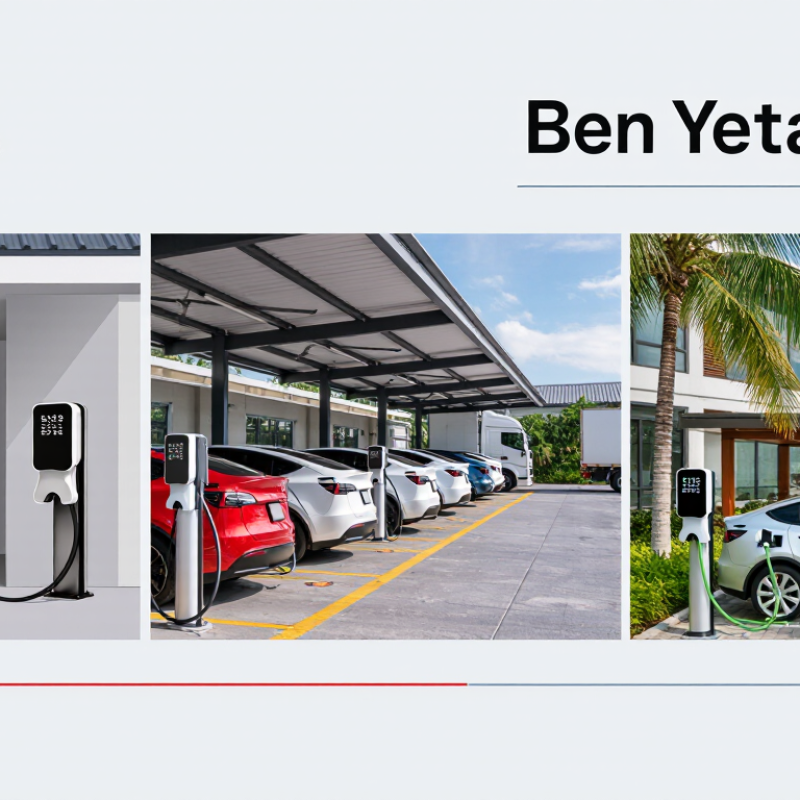
How to Choose the Best AC EV Charger for Global Buyers?

Define Your EV Charging Needs and Vehicle Compatibility

Start with the vehicle, not the charger. Check the owner’s manual for the AC inlet type, maximum charging power, and permitted voltage range. Common connectors differ by region, so physical fit alone proves little. A vehicle may accept 11 kW, while a 22 kW charger only delivers 11 kW. Compatibility comes first.

Review your home or workplace supply before choosing an output rating. A single-phase connection may support 3.7 or 7.4 kW, while a three-phase system can support higher power. Ask a qualified electrician to confirm cable size, circuit capacity, earthing, and local installation requirements. Include residual current protection and suitable outdoor protection when needed. Safety is not a feature to guess.

Your daily distance also matters. A driver covering 40 kilometers overnight may not need the fastest charger. A 7.4 kW unit can often restore that energy within several hours, depending on the vehicle and conditions. Frequent long-distance driving may justify a higher-rated installation. Higher power is not always better. It can increase installation costs without reducing charging time if the car has a smaller onboard charger.

In field checks, buyers often focus on screen functions and forget cable length, connector storage, and winter performance. That mistake is easy to repeat. Measure twice. For international purchases, verify testing documentation, ingress protection, temperature limits, and compatibility with the destination grid. Standards and electrical rules vary, so independent technical advice remains valuable.

Compare AC Charger Types, Power Ratings, and Charging Speeds

How to Choose the Best AC EV Charger for Global Buyers?

Compare AC Charger Types, Power Ratings, and Charging Speeds

AC charging performance depends on voltage, current, and the vehicle’s onboard charger. In many homes, Level 1 charging uses a standard household supply and delivers roughly 1 to 2 kW. It suits overnight parking and drivers with short daily trips. Level 2 charging usually operates at 208–240 V and provides about 3.6 to 22 kW. Three-phase systems can reach higher ratings, but local electrical capacity may limit installation. Speed is not everything.

A charger rated at 22 kW cannot charge every vehicle at 22 kW. The vehicle may accept only 7.4 or 11 kW through its onboard charger. A 7.4 kW unit can add approximately 35 to 50 kilometres of range per hour, depending on vehicle efficiency. Weather, battery temperature, and charging losses also affect real results. My first comparison was too simple. Higher power looked better, but it was sometimes unnecessary.

Global buyers should check connector compatibility, grid standards, and household wiring before comparing prices. Look for verified safety testing, residual-current protection, over-temperature control, and a suitable IP rating for outdoor installation. Load management can prevent a charger from competing with ovens or heat pumps for available power. Ask a qualified electrician to confirm circuit size and earthing requirements. Measure twice. A compact 7.4 kW charger may be more practical than a powerful unit that requires expensive electrical upgrades. Availability of replacement parts and clear technical support also matters when specifications differ across regions.

Check Electrical Standards, Connector Options, and Safety Features

Choosing an AC EV charger for global use starts with the electrical standard, not the charging speed. Check the supply voltage, frequency, phase configuration, and permitted current in the installation country. IEC 61851 covers charging control, while IEC 62196 defines common connector requirements. Local rules may add stricter conditions. A qualified electrician should verify the circuit capacity, grounding, breaker size, and cable length before purchase.

Connector choice affects daily convenience. Type 2 is widely used across many regions, while Type 1 remains common in some vehicles and markets. Confirm the vehicle inlet, not only the charger socket. A detachable cable offers flexibility, but it can be misplaced or exposed to moisture. A fixed cable is simpler at home. Check its reach in real parking conditions. Two extra meters can prevent awkward positioning.

Safety features deserve close inspection. Look for residual-current protection, over-temperature monitoring, surge protection, and automatic power reduction. Dynamic load management helps prevent the charger from overloading a household supply when ovens or heat pumps operate. Weather-resistant housing matters outdoors, especially where rain, dust, or freezing temperatures are normal. Certification marks support reliability, but they do not replace local inspection. A common mistake is trusting a high current rating without checking the building’s wiring. Higher power is not always better. Sometimes, it is simply unsuitable.

How to Choose the Best AC EV Charger for Global Buyers? - Check Electrical Standards, Connector Options, and Safety Features

Market or Region Common AC Supply Frequency Common AC Connector Relevant Standards or Requirements Typical AC Charging Output Important Selection Checks
North America
United States, Canada, Mexico
120 V single-phase or 208–240 V split-phase/single-phase 60 Hz SAE J1772 Type 1; some vehicles also use an AC inlet based on CCS1 SAE J1772 signaling; applicable national electrical codes; local certification requirements Approximately 1.4–1.9 kW at 120 V; approximately 3.3–19.2 kW at 208–240 V, depending on current and installation Confirm line-to-line voltage, circuit rating, overcurrent protection, cable temperature rating, and certified installation requirements.
European Union and many other countries 230 V single-phase or 400 V three-phase 50 Hz IEC 62196 Type 2 IEC 61851 conductive charging system; IEC 62196 connector requirements; local low-voltage installation rules Approximately 2.3–7.4 kW single-phase; up to approximately 11–22 kW three-phase where supported Check whether the vehicle supports three-phase charging, confirm neutral and protective-earth wiring, and verify residual-current protection.
United Kingdom 230 V single-phase; three-phase supplies may be available in selected installations 50 Hz IEC 62196 Type 2 IEC 61851 and applicable UK wiring and electrical installation requirements Typically 3.6–7.4 kW for single-phase residential charging Check load management, protective-device coordination, earthing arrangement, outdoor installation rating, and local installation rules.
China 220 V single-phase; approximately 380 V three-phase 50 Hz GB/T AC charging connector GB/T 18487 series and GB/T 20234 series, together with applicable national and local electrical requirements Commonly approximately 3.3–7 kW single-phase; higher three-phase power depends on the vehicle and installation Confirm GB/T compatibility, communication requirements, earthing method, overcurrent protection, and local certification.
Japan 100 V or 200 V single-phase 50 or 60 Hz, depending on area Type 1 is commonly used for AC vehicle inlets; confirm the vehicle specification Applicable Japanese electrical and charging-equipment requirements Approximately 1.5–6 kW, depending on supply voltage, current, and vehicle capability Verify regional frequency, available voltage, plug configuration, grounding, and compatibility with the vehicle inlet.
Australia and New Zealand 230–240 V single-phase; three-phase supplies may be available 50 Hz IEC 62196 Type 2 is widely used IEC 61851 and applicable national wiring, product safety, and installation requirements Approximately 2.3–7.4 kW single-phase; higher power may be available with three-phase supply Check local approval requirements, dedicated-circuit capacity, weather protection, cable management, and residual-current protection.
Global Selection Checklist: Choose the connector that matches the vehicle inlet; verify nominal voltage, phase configuration, frequency, and maximum current; confirm compliance with the destination market’s certification requirements; select residual-current protection appropriate to the charger design; and check the enclosure rating, operating temperature, surge protection, overcurrent protection, overvoltage protection, ground-fault detection, pilot-signal control, and emergency shutdown functions.

Evaluate Installation Requirements, Smart Functions, and Connectivity

How to Choose the Best AC EV Charger for Global Buyers?

Global buyers should evaluate the site before comparing charging speed. An electrician must confirm voltage, phase, panel capacity, cable distance, and earthing. Outdoor units need weather protection and suitable residual-current protection. IEC 61851 and IEC 62196 provide useful reference points, but local certification still controls installation. Measure twice. Real sites are untidy.

The International Energy Agency’s Global EV Outlook 2024 reports that public charging points exceeded four million worldwide in 2023. The network also grew by more than 40% that year. This growth makes interoperability less optional. Look for scheduled charging, dynamic load balancing, tariff integration, and clear energy reports. These functions matter when several vehicles share one feeder. A faster charger is not always better. Many buyers overvalue peak kilowatts and undervalue stable load control.

Wi-Fi is convenient, yet garages often have weak signals. Ethernet or cellular backup can prevent silent failures. Choose support for OCPP and, where compatible, ISO 15118 features such as Plug and Charge. Ask how firmware updates, passwords, encryption, and user permissions are managed. U.S. Department of Energy managed-charging guidance emphasizes coordinated charging as electric vehicle adoption rises. Do not guess. Remote control is useful, but it can create dependence on cloud services. Specify local charging fallback and exportable data. That small detail is frequently missed during procurement.

How to Choose the Best AC EV Charger for Global Buyers

Compare common AC charger configurations by nominal output to evaluate electrical installation capacity before selecting smart and connected functions.

Installation requirements

Confirm the local supply voltage, phase arrangement, available current, circuit protection, earthing, and cable size. A 22 kW three-phase charger requires substantially more site capacity than a 7.4 kW single-phase unit.

Smart functions

Load balancing, scheduled charging, dynamic power management, energy monitoring, and solar integration can help prevent overloads and reduce charging costs.

Connectivity

Choose Wi-Fi, Ethernet, cellular, Bluetooth, or OCPP support according to the site network and management platform. Connectivity requirements vary by residential, commercial, and fleet applications.

Nominal output is calculated as voltage × current: single-phase power uses V × A, while three-phase power uses √3 × V × A. Actual charging power may be limited by the vehicle, installation, or charger settings.

Assess Certifications, Total Cost, Warranty, and Global Support

How to Choose the Best AC EV Charger for Global Buyers?

Certification should be your first filter, not a decorative logo. Check conformity with IEC 61851 and IEC 62196 where applicable. Regional requirements may also include electrical safety, electromagnetic compatibility, and residual-current protection. The International Energy Agency reported nearly 14 million electric cars were sold worldwide in 2023. That growth increases demand for dependable home and workplace charging. A certificate alone is not enough. Verify its issuing body, test scope, and product model.

Total cost includes installation, software, maintenance, energy losses, and possible replacement parts. A cheaper charger may require expensive rewiring or a separate protection device. Request a five-year cost estimate from the supplier. Include local labor rates and currency changes. The IEA’s Global EV Outlook 2024 noted that public charging points exceeded four million globally by the end of 2023. This expanding network shows why compatibility and serviceability matter. It also reveals a common mistake: buyers compare hardware prices, but ignore downtime.

Warranty terms deserve close reading. Look for clear coverage periods, response times, spare-part availability, and exclusions for cables or communication modules. Global support should include multilingual manuals, remote diagnostics, regional technicians, and stable firmware updates. Ask who answers after installation. A 24-month warranty sounds useful, yet slow repairs can make it meaningless. No checklist is perfect. Recheck assumptions with an electrician and a local compliance expert before purchasing. Sources: International Energy Agency, Global EV Outlook 2024; IEC 61851 and IEC 62196 standards.

FAQS

How can I check whether an AC charger suits my electric vehicle?

Read the vehicle manual carefully. Check the inlet type, maximum AC power, and permitted voltage range. A matching plug does not guarantee full compatibility. The vehicle may accept 11 kW from a 22 kW charger.

What home electrical details should I confirm before installation?

Ask a qualified electrician to inspect the supply. They should check phases, cable size, circuit capacity, earthing, and local requirements. Residual-current protection may be necessary. Do not guess about safety.

Is a higher-power charger always the better choice?

No. Higher power can increase installation costs without reducing charging time. A vehicle with a 7.4 kW onboard charger cannot use the full output of a 22 kW unit. I initially compared power ratings too simply.

How much charging power might a typical home need?

Household charging may provide roughly 1 to 2 kW on a basic supply. Many higher-power systems provide about 3.6 to 22 kW. A 7.4 kW charger can add approximately 35 to 50 kilometres hourly. Actual results vary.

How should daily driving distance affect my charger choice?

A driver covering 40 kilometres daily may not need the fastest charger. Several hours of overnight charging could restore that energy. Frequent long-distance driving may justify a higher rating. Faster is not automatically practical.

What physical features should I inspect before buying?

Measure the cable length and check connector storage. Consider outdoor protection, temperature limits, and winter performance. A charger can look excellent on a screen yet feel awkward beside a garage wall. That detail is easy to miss.

Which safety and compliance documents should global buyers review?

Check applicable testing for IEC 61851 and IEC 62196. Review electrical safety, electromagnetic compatibility, and residual-current protection. Confirm the issuing body and exact product model. A certificate alone is not enough.

What costs should I include beyond the charger price?

Include installation, rewiring, protection devices, software, maintenance, energy losses, and replacement parts. Ask for a five-year estimate using local labor rates. A cheap unit may become expensive after installation. Recheck the assumptions.

What warranty and support details matter most?

Check coverage periods, repair response times, spare-part access, and exclusions. Ask whether manuals, diagnostics, and firmware updates support your region. A 24-month warranty sounds useful. Slow repairs can make it less meaningful.

Conclusion

Choosing the best Ac Ev Charger for global use begins with understanding your vehicle, daily driving habits, charging location, and required charging speed. Compare charger types and power ratings to find a suitable balance between convenience, energy use, and installation capacity. Compatibility with local electrical standards, connector options, voltage ranges, and essential safety protections is also important for reliable operation in different regions.

Before purchasing, evaluate installation conditions, cable length, weather resistance, and whether smart functions such as scheduling, load management, mobile monitoring, or network connectivity are valuable for your needs. Finally, review certifications, warranty coverage, maintenance support, and the total cost of ownership rather than focusing only on the initial price. A well-selected Ac Ev Charger should provide dependable performance, safe charging, flexible connectivity, and practical long-term support for both residential and commercial users worldwide.


Oliver

Oliver

Oliver is a seasoned marketing professional with a wealth of expertise in driving brand awareness and engagement. With a deep understanding of our company's product offerings, he consistently delivers high-quality content that enriches our professional blog. His insights not only shed light on......