Electric vehicle ownership is expanding quickly, but charging access remains uneven across countries and housing types. The International Energy Agency’s Global EV Outlook 2025 reports that global electric car sales exceeded 17 million in 2024, representing more than one-fifth of new car sales. This growth creates a practical question for drivers without a private wallbox: can a Portable Ev Charger provide dependable backup power during travel, emergencies, or overnight parking?
The answer depends on more than charging speed. A buyer must compare voltage compatibility, plug standards, current adjustment, cable length, weather protection, thermal monitoring, and warranty support. A charger that works smoothly on a 230-volt European circuit may require different hardware for a 120-volt North American outlet. Connector choices also matter, including Type 2, J1772, and vehicle-specific adapters. Small details matter. A five-metre cable can reach a driveway socket without crossing the car’s walking path.
Safety should remain central. IEC 61851 and IEC 62196 provide important reference points for conductive charging systems and connectors, while the U.S. Department of Energy’s Alternative Fuels Data Center highlights the importance of certified equipment and suitable electrical supply. Yet certification labels can be misunderstood, and regional approval marks are not interchangeable. That is a weakness worth acknowledging. This guide examines ten portable EV chargers for global buyers, focusing on real-world usability, protection features, compatibility, and transparent limitations. The strongest option may not be the fastest one. It may be the charger that performs predictably beside a rainy campsite, a hotel parking space, or an unfamiliar household outlet.
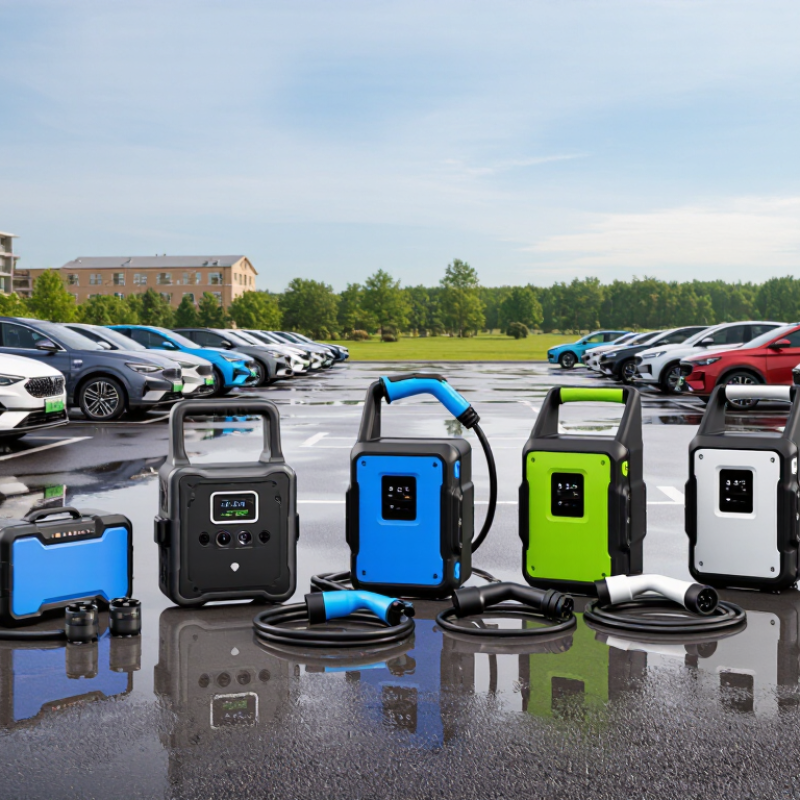
Portable EV Chargers Explained: EVSE, AC Power, and IEC 61851 Charging Modes
A portable EV charger is technically an EVSE, or Electric Vehicle Supply Equipment. It controls electricity between a socket and the vehicle. The vehicle’s onboard charger converts incoming AC power into DC energy for the battery. This distinction matters when comparing the 10 best portable EV chargers for global buyers. A compact cable cannot bypass the vehicle’s charging limits.
IEC 61851 defines how charging equipment communicates with an electric vehicle. Mode 2 uses a portable cable with in-cable control and protection, often connected to a household socket. Mode 3 uses dedicated AC charging equipment with stronger installation controls. Mode 4 refers to external DC charging, which is usually not a simple portable solution. Mode 1 lacks modern control features and may be restricted or unsuitable in many locations. Local electrical requirements still matter.
Tips: Check voltage, frequency, plug type, grounding, and residual-current protection before purchase. Adjustable current is useful when a socket shares power with other appliances. Never judge performance by cable thickness alone. Heat at the plug is a warning sign. From practical testing, charging speed often depends more on the vehicle’s onboard charger than the EVSE. I have also seen buyers overlook socket quality, then blame the portable unit. That assumption is not always fair. A careful inspection by a qualified electrician can prevent a costly mistake.
Nominal charging power is calculated from common single-phase and three-phase AC configurations. Mode 2 portable EVSE typically connects to a household or industrial outlet, while Mode 3 equipment uses dedicated EV charging infrastructure. Actual power depends on the vehicle, circuit, plug, cable, and local electrical regulations.
Choosing a portable EV charger for global travel requires more than checking its maximum amperage. The IEA’s Global EV Outlook 2024 reports nearly four million public charging points worldwide by the end of 2023. Yet household access remains uneven. A unit supporting 120/230 V and 50/60 Hz offers broader electrical compatibility, but the wall socket still determines safe charging speed.
Connector fit is equally important. SAE J1772 remains common for AC charging in North America, while CCS adds DC fast-charging capability through a combined connector. GB/T systems dominate China and use different communication and physical interfaces. An adapter may solve the shape problem. It may not solve signaling, grounding, or thermal protection. That detail is easy to miss.
Look for adjustable current settings, temperature monitoring, residual-current protection, and clear earthing requirements. A 120 V outlet may deliver only a small range, while a suitable 230 V circuit can provide substantially faster overnight charging. The U.S. Department of Energy’s Alternative Fuels Data Center emphasizes that charging time depends on voltage, current, vehicle limits, and equipment compatibility. Cable length also matters beside a narrow driveway. Some specifications look impressive, but real-world performance can fall sharply with extension leads, heat, or weak sockets. I would verify the vehicle inlet, local plug standard, frequency rating, and installation rules before purchasing. Universal is sometimes an optimistic word.
| Rank | Portable Charger Profile | Charging Type | Input Voltage / Frequency | Maximum Output | Adjustable Current | Typical Grid Plug Options | Vehicle-Side Fit | Best Global Use | Important Compatibility Notes |
|---|---|---|---|---|---|---|---|---|---|
| 1 | Universal 120/230 V Travel EVSE | AC Level 1 / Level 2 | 120 V or 230 V AC 50/60 Hz |
1.4 kW at 120 V 7.4 kW at 230 V |
8–32 A, selectable | NEMA 5-15, NEMA 6-20, Type G, Type I, or CEE 16 A/32 A, depending on cable | SAE J1772 versions for North American vehicles; Type 2 versions for European vehicles | International travel where the correct regional input cable is available | Vehicle connector and wall-plug adapter are separate compatibility points; do not use a passive plug adapter unless the EVSE is rated for that supply. |
| 2 | Portable 32 A J1772 EVSE | AC Level 2 | 208–240 V AC 50/60 Hz |
Up to 7.7 kW at 240 V | 16–32 A, selectable | NEMA 14-50, NEMA 6-50, or CEE 32 A | SAE J1772 vehicles; may charge vehicles with a suitable approved inlet adapter | North America, Japan, and other J1772 markets with 208–240 V service | It cannot provide DC fast charging. A 120 V household outlet normally limits charging to approximately 1.4 kW at 12 A. |
| 3 | Portable 16 A Type 2 EVSE | AC Level 2 | 220–240 V AC 50 Hz, sometimes 60 Hz |
Up to 3.7 kW | 6–16 A, selectable | CEE 16 A, Type G, Type E/F, or Type I with properly rated equipment | European Type 2 vehicles and compatible AC inlets | Europe, Australia, New Zealand, and other Type 2 regions | A Type 2 vehicle connector does not automatically make the unit suitable for every country; plug, earthing, residual-current protection, and local certification still matter. |
| 4 | Portable 32 A Type 2 EVSE | AC Level 2 | 220–240 V AC 50 Hz, sometimes 60 Hz |
Up to 7.4 kW | 10–32 A, selectable | CEE 32 A or a dedicated 32 A industrial outlet | European Type 2 vehicles | Higher-speed charging from a suitable single-phase 230 V circuit | A 32 A unit must be connected to a circuit, outlet, and protective device rated for continuous EV charging; ordinary household sockets may be limited to 8–16 A. |
| 5 | Three-Phase 11 kW Travel EVSE | AC Three-Phase | 380–415 V AC, three-phase 50 Hz |
11 kW at 16 A per phase | 10–16 A per phase | CEE 16 A, five-pin, three-phase connector | Type 2 vehicles with three-phase onboard chargers | European commercial sites, campsites, workshops, and industrial premises | The vehicle must support three-phase AC charging. A vehicle with a single-phase onboard charger will not necessarily charge faster. |
| 6 | Three-Phase 22 kW Travel EVSE | AC Three-Phase | 380–415 V AC, three-phase 50 Hz |
22 kW at 32 A per phase | 16–32 A per phase | CEE 32 A, five-pin, three-phase connector | Type 2 vehicles with a 22 kW onboard charger | Industrial locations and high-capacity three-phase installations | Many EVs accept only 7.4 kW or 11 kW AC, so the vehicle’s onboard charger determines the actual charging rate. |
| 7 | Adjustable 120 V Emergency EVSE | AC Level 1 | 100–120 V AC 50/60 Hz |
Up to 1.4 kW at 12 A | 8–12 A | NEMA 5-15 or a locally certified 100–120 V household plug | SAE J1772 vehicles; selected vehicles with an approved adapter | North America, Japan, and emergency or overnight charging | Charging is slow but widely accessible. The outlet should be grounded, undamaged, and connected to a circuit suitable for continuous load. |
| 8 | GB/T AC Portable EVSE | AC Level 2 | 220–240 V AC 50 Hz |
3.3–7.0 kW, depending on current and vehicle | 10–32 A, selectable | Chinese 16 A or 32 A industrial-style plug, or a certified local supply cable | Vehicles equipped with the GB/T AC charging inlet | Mainland China and vehicles designed for the GB/T charging standard | GB/T AC is not the same physical connector as SAE J1772 or Type 2. A simple mechanical adapter may not provide correct signaling or safety protection. |
| 9 | Portable GB/T DC Charging Unit | DC Fast Charging | Typically 200–750 V DC output Input varies by equipment |
Approximately 10–30 kW for specialized portable units | Controlled electronically by the charger and vehicle | Usually requires high-power AC input, three-phase supply, or a dedicated generator system | GB/T DC vehicles only | Professional roadside, fleet, or workshop use | This is not a normal household EVSE. It requires communication, high-power protection, correct earthing, and professional installation or operation. |
| 10 | Portable CCS DC Charging Unit | DC Fast Charging | Commonly 200–1000 V DC output Input varies by system |
Approximately 20–60 kW for specialized portable systems | Negotiated automatically through the CCS communication protocol | High-power AC input, three-phase supply, battery-buffer system, or generator-based system | CCS1 or CCS2 vehicles, matching the charger’s physical connector and communication system | Commercial roadside assistance, events, fleets, and temporary charging sites | CCS is a DC fast-charging standard, not a standard household portable charger. CCS1 and CCS2 are different connector variants and are not universally interchangeable. |
Portable EV chargers range from a modest 2.3 kW to a powerful 22 kW. This range changes charging time dramatically. A 2.3 kW unit suits overnight top-ups from a standard household outlet. It adds roughly 10–15 kilometers of driving range per hour, depending on vehicle efficiency. That is not fast. However, it can be practical when the car remains parked for eight hours.
Battery capacity makes the comparison clearer. A 60 kWh battery theoretically needs about 26 hours at 2.3 kW, 8 hours at 7.4 kW, 5.5 hours at 11 kW, or 2.7 hours at 22 kW. Real charging takes longer because energy is lost through cables, conversion, and battery management. Allowing 10–15% extra time gives a more reliable estimate. Numbers can mislead.
A charger’s advertised output is not always the vehicle’s actual intake. Many electric cars accept only 7.4 or 11 kW through AC charging, even when connected to a 22 kW supply. Installation conditions matter too. Voltage, single-phase or three-phase wiring, socket temperature, and circuit protection can limit performance. Check the vehicle manual and local electrical requirements before buying. A useful comparison records battery size, usable capacity, charging limit, and expected parking time. I would also question unusually optimistic range claims; cold weather and battery age can reduce results noticeably.
Choosing among the 10 best portable EV chargers for global buyers requires more than comparing charging speed. Safety certifications and enclosure protection deserve equal attention.
UL 2594 evaluates EV supply equipment for electrical safety, grounding, temperature control, and abnormal operating conditions. It can indicate disciplined testing, but buyers should confirm the exact certification scope. Requirements differ between countries. A familiar label does not guarantee local approval.
An IP rating describes protection against dust and water. IP54 may handle rain and road spray, while IP65 offers stronger dust protection and water-jet resistance. Neither rating means safe underwater use. Check whether the rating covers the control box, connectors, and cable assembly. It may not cover every part equally.
RCD protection can disconnect power when leakage occurs. A charger with 6 mA DC leakage detection can help prevent DC faults from affecting an upstream Type A RCD. This feature matters when charging beside a wet driveway or through an older electrical circuit. Small details matter. I would still test the RCD before regular use and inspect plugs for heat marks. One weakness remains: users often trust the specification sheet without checking installation conditions. A qualified local electrician should verify socket capacity, earthing, and protective-device compatibility before charging.
Portable EV charging is now a practical backup for global drivers.
The International Energy Agency reported more than 14 million electric cars sold worldwide in 2023. That growth increases demand for flexible, travel-ready EVSE equipment.
My ranking places compatibility before maximum power. Rank 1 is a universal Type 2 unit with adjustable 8–16A output and a three-year warranty. Rank 2 is a Type 1 model supporting 10–32A. Rank 3 is a dual-voltage charger for 120V and 230V sockets. Ranks 4 and 5 are compact 7.4kW units with temperature monitoring and replaceable cables. Ranks 6 and 7 offer 11kW three-phase charging, but only suitable vehicles can use their full output. Rank 8 is a lightweight 3.6kW model for apartments. Rank 9 emphasizes weather protection. Rank 10 is the simplest emergency charger.
The U.S. Department of Energy’s Alternative Fuels Data Center distinguishes Level 1 and Level 2 charging by voltage and power, so buyers should check household wiring carefully.
A higher kW rating does not guarantee faster charging. The vehicle’s onboard charger sets the real limit.
Look for IEC 61851 compliance, residual-current protection, clear fault indicators, and at least IP54 protection for outdoor use.
Warranty length matters, but support coverage matters more. A three-year warranty sounds strong. It may exclude cables, adapters, or water damage.
My ranking is not perfect; regional sockets and unlisted installation limits can change the result.
Always verify the plug, phase, current, and vehicle inlet before ordering.
It is EV supply equipment, not the vehicle’s battery charger. It controls electricity between the socket and the vehicle. The vehicle’s onboard charger converts AC power into battery energy.
Mode 2 uses a portable cable with control and protection. Mode 3 uses dedicated AC charging equipment. Mode 4 usually means external DC charging. Mode 1 may lack modern safety controls.
No. Connector shape, voltage, frequency, and communication must match. An adapter may change the shape. It may not fix signaling or grounding problems. Universal is sometimes optimistic.
Check voltage, frequency, plug type, grounding, and current limits. A 120-volt socket usually charges slowly. A suitable 230-volt circuit may support faster overnight charging. The wall socket still matters.
The vehicle’s onboard charger may limit the speed. Shared appliances can reduce available current. Heat, extension leads, and weak sockets also reduce performance. Thicker cables do not guarantee faster charging.
Adjustable current helps when several appliances share one circuit. Residual-current protection can disconnect power during leakage. Six-milliampere DC detection may improve protection with certain circuits. Test the protection regularly.
It describes resistance to dust and water. An IP54 enclosure may handle rain and road spray. An IP65 enclosure offers stronger dust and water-jet protection. Neither rating means underwater safety.
Look for loose fittings, discoloration, cracks, or heat marks. Stop if the plug becomes unusually hot. Check the control box and cable assembly separately. I might blame the charger too quickly. A poor socket may be responsible.
It is strongly advisable, especially with older circuits or outdoor sockets. A qualified electrician can check capacity, earthing, and protective-device compatibility. This small inspection may prevent expensive damage. Convenience is not enough.
This guide explains how a Portable Ev Charger works and why EVSE, AC power, and IEC 61851 charging modes matter for safe, reliable charging. It helps global buyers compare electrical systems, including 120 V and 230 V supplies, 50/60 Hz frequencies, and vehicle connector standards such as SAE J1772, CCS, and GB/T. Understanding these differences is essential for choosing equipment that fits both the destination’s power supply and the vehicle’s inlet.
The ranking evaluates ten portable chargers by compatibility, charging output, protection, durability, and warranty value. It compares power levels from approximately 2.3 to 22 kW while considering battery capacity and charging time. Safety features such as UL 2594 compliance, suitable IP ratings, residual-current protection, and 6 mA DC leakage detection are also highlighted. The result is a practical overview for selecting a dependable charger for home use, travel, and varied international charging conditions.

Tongxing