Choosing the right DC Fast Charger for your business is crucial. The right charger can enhance customer experience and drive traffic. Many businesses now require fast charging solutions to meet the growing demand for electric vehicles. However, selecting the best option can be challenging.
Consider the specific needs of your business. How many vehicles do you serve? What is the available space for installation? It's important to understand the charging speeds that cater to your customer base. Not all DC Fast Chargers are created equal. There are various brands, and each has unique features. You need to do your homework.
Reliability and support from the manufacturer are key. Some options may seem appealing but lack customer service. Think about the long-term investment too. An initial low-cost unit might lead to hidden costs later. Reflect on these aspects, ensuring your choice aligns with your business goals. A wise decision now will pay off in the future.
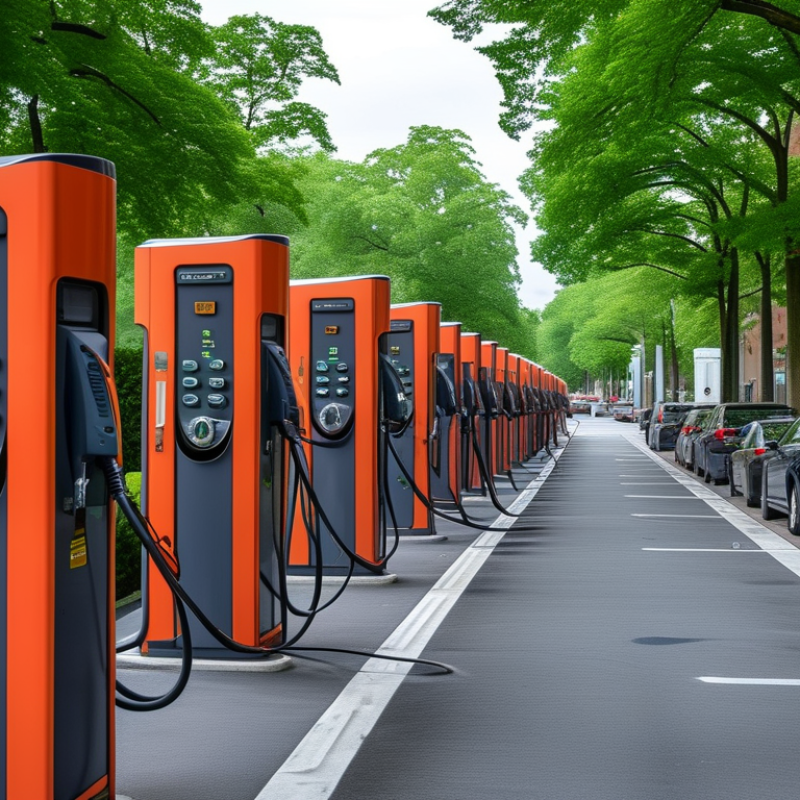
When considering DC fast chargers for your business, it's essential to understand their types and specifications. There are three primary types: Level 1, Level 2, and DC fast chargers. DC fast chargers are distinct as they provide rapid charging capabilities, often delivering up to 350 kW. This allows electric vehicles (EVs) to charge to 80% in as little as 20–30 minutes. Reports indicate that as of 2022, DC fast charger installation has grown by 20% annually, emphasizing their increasing role in supporting EV infrastructure.
Tip: Evaluate your business's location and traffic. High-demand areas will benefit from powerful DC fast chargers. Understanding the power output necessary for your expected customer base is crucial.
Battery management systems and cable specifications are important factors in selecting the right charger. Most DC fast chargers utilize CCS (Combined Charging System) or CHAdeMO connectors. Additionally, consider compatibility with various vehicle types to ensure wider customer access. According to the International Energy Agency, the global stock of public charging points reached 2.1 million by the end of 2021. This points to the growing need for diverse charging solutions.
Tip: Check your electrical infrastructure. It must support the high demand of DC fast chargers, or installation may lead to costly upgrades. Evaluating your current setup can save future headaches.
When choosing a DC fast charger for your business, power output plays a crucial role. Measured in kilowatts (kW), the ratings determine how quickly vehicles can charge. Businesses need to analyze their charging needs carefully. Higher kW ratings typically translate to faster charging speeds, which can enhance customer satisfaction. For example, a 50 kW charger can offer a decent charge in about 30 minutes, making it suitable for businesses with high vehicle turnover.
Each business is unique. Evaluate the types of electric vehicles you expect to serve. Some might require higher power outputs, while others do just fine with less. Consider the local grid capabilities. Strain on local resources can affect your charger’s performance. Energy management systems could help balance demand and improve reliability.
Tips: Don't overlook installation costs and space requirements. A well-placed charger can attract more customers. Also, assess your future growth. Investing in a slightly higher kW charger can save costs as demand increases. Keep in mind the changing technology as well. What works today might not be optimal tomorrow. Stay informed and adapt accordingly.
When selecting a DC fast charger for your business, installation requirements are crucial. Assess the available space in your facility. Many fast chargers require dedicated areas with easy vehicle access. Consider potential obstacles, like pillars or other equipment, that could impede installations. A clear and open area can enhance operational efficiency.
Next, focus on electrical capacity. Fast chargers draw substantial power, often more than standard outlets can supply. Check your electrical infrastructure. Upgrades might be necessary to support the increased load. Consult an electrician to determine what changes are needed, ensuring safety and compliance.
Cost is another significant factor. Installation expenses can vary widely based on location, equipment, and electrical upgrades. It’s essential to budget not only for the charger but also for any necessary modifications. Therefore, obtaining multiple quotes from contractors can provide insight into fair market rates and potential hidden fees.
Reflect on your long-term needs. Choosing an inadequate charger today may lead to unmet demand down the line. Prioritizing space, electrical capacity, and costs will help ensure your investment serves your business effectively.
When selecting DC fast chargers for your business, understanding connector types is crucial. The most common connectors are CCS, CHAdeMO, and Tesla ports.
CCS (Combined Charging System) has gained significant traction in North America and Europe. According to the International Energy Agency, CCS accounts for nearly 70% of DC fast charging stations in these regions.
CHAdeMO is another standard, primarily used by certain Asian manufacturers. However, it represents about 15% of the global market. While Tesla’s proprietary connectors are dominant in its network, they limit the versatility of charging for mixed fleets. Businesses need to evaluate their vehicle types and ensure compatibility with desired charging stations.
Investing in the right connector types can save time and money. Fleets that utilize multiple connector types may experience downtime during charging. This downtime can lead to inefficiencies and reflect poorly on operations. Therefore, a balanced approach to connector compatibility is vital for maximizing fleet performance.
Investing in a DC fast charger requires analyzing the return on investment (ROI). The initial cost of equipment can be daunting. A DC fast charger can range from $10,000 to $40,000, depending on its specifications. However, potential usage and customer demand can offset these costs over time. The average EV owner is willing to pay up to $0.30 per kWh. This pricing can lead to a profitable charging station if managed well.
Recent studies indicate that around 27% of drivers prefer fast charging options. Additionally, data shows that businesses with charging stations see a noticeable increase in foot traffic, which may lead to additional sales in nearby stores or services. Yet, not all locations are suitable for chargers. Understanding the local EV market is crucial. Potential customers may not congregate in areas lacking EVs.
Evaluating customer patterns can be challenging. Businesses must consider the balance between charger installation costs and usage rates. Some companies may install chargers without proper demand assessment. This misstep can lead to wasted resources. A thorough analysis and regular monitoring are vital. Identifying peak hours and actual usage rates can guide effective investments.
: DC fast chargers provide rapid charging for electric vehicles. They can charge to 80% in 20-30 minutes.
Evaluate your location and traffic. High-demand areas benefit from powerful chargers to meet customer needs.
Power output affects charging speed. Higher kW ratings mean faster charging, enhancing customer satisfaction.
Common connectors include CCS and CHAdeMO. Ensure compatibility with your fleet for efficient operations.
Your electrical setup must support high demand. Upgrades may be costly if your infrastructure is insufficient.
Technology changes rapidly. What works today might not be optimal tomorrow. Stay informed and adapt.
Effective battery management ensures safety and efficiency. Choose chargers that work well with your system.
Lower kW chargers might not meet future demands. Investing in a higher rated charger can save costs later.
Downtime from incompatible connectors wastes time and reflects poorly on operations. Ensure compatibility to avoid this.
Different vehicles may have different charging needs. Analyze these requirements carefully for optimal charger selection.
When choosing the best DC fast charger for your business, it’s essential to understand the various types and specifications available. Evaluating the power output, measured in kW ratings, is crucial as it directly impacts charging speeds and efficiency. Additionally, considering installation requirements such as available space, electrical capacity, and associated costs will help ensure that the charger integrates smoothly into your existing infrastructure.
Selecting the appropriate connector types is vital for accommodating the specific needs of your fleet, as different vehicles may require various connectors. Lastly, analyzing the return on investment (ROI) involves weighing the cost of the equipment against expected usage and customer demand, ensuring that the DC fast charger meets not only operational needs but also business objectives. By carefully assessing these factors, businesses can make informed decisions that enhance their electric vehicle support capabilities.

Tongxing