As the electric vehicle (EV) market expands rapidly, understanding how to choose the best EV car charger becomes crucial. According to the International Energy Agency (IEA), global electric vehicle sales reached 10 million units in 2022, marking a significant 55% increase from 2021. With this growth, the demand for efficient charging infrastructure has reached new heights, making the selection of the right charger vital.
Industry expert Mark Johnson, a senior analyst at EV Charger Insights, states, “The right EV car charger can enhance your driving experience significantly.” Different models offer various charging speeds, compatibility, and installation requirements. A Level 2 charger can provide up to 25 miles of range per hour, making it an appealing option for many users. However, some individuals may overlook the importance of evaluating their specific needs, leading them to make less informed choices.
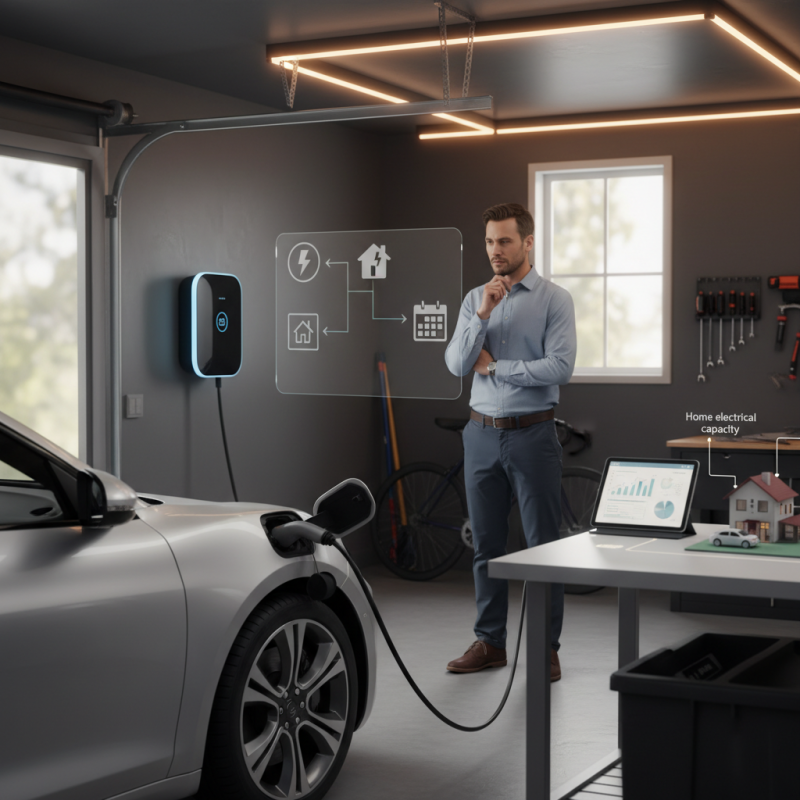
Consider your daily driving habits and home electrical capacity. These factors are essential in determining the best fit for you. As the EV landscape continues to evolve, it’s vital to reflect on your personal requirements when investing in an EV car charger. Balancing efficiency and convenience will enhance your electric vehicle experience.
Understanding Different Types of EV Chargers: Level 1 vs. Level 2 vs. DC Fast Charging
When considering an EV charger, understanding the differences among Level 1, Level 2, and DC Fast Charging is crucial. Level 1 chargers use a standard 120V outlet. They are widely accessible but charge slowly—typically adding about 4 to 5 miles of range per hour. Ideal for overnight charging, they might not meet the needs of daily drivers who travel longer distances.
Level 2 chargers operate at 240V and are more efficient. They usually provide 10 to 60 miles of range per hour. Most home installations favor Level 2 due to a balance between speed and cost. Studies show that approximately 80% of EV owners prefer Level 2 chargers for home use. However, they require an electrician and can involve higher installation costs.
DC Fast Charging is the quickest option, delivering up to 80% charge in about 30 minutes, depending on the vehicle. They are typically found at public charging stations. However, not all EVs can use them, creating a hurdle for some drivers. According to industry reports, about 37% of EV owners express concern over charger availability. The right choice depends on driving habits and charging infrastructure in your area.
Assessing Charging Speed: Understanding kW Ratings and Charge Times for EVs
When selecting an EV charger, understanding kW ratings is crucial. The kW rating indicates how quickly a charger can deliver energy to your vehicle. Higher kW ratings often mean faster charging. However, the actual charge time also depends on your EV's battery capacity. For example, a 7 kW charger makes more sense for smaller batteries. It balances speed and efficiency.
Charging times can vary significantly. For instance, using a 22 kW charger can top off a larger battery in a couple of hours, while a standard 3 kW charger may take overnight. Not all charging stations provide the same rates. Always check your EV’s specifications to match it with an appropriate charger. Sometimes, investing in a higher kW charger seems smart, but consider your actual usage needs.
There are situations where a higher kW charger isn't necessary. If you mainly charge overnight, a lower-rated option might suffice. Additionally, ensure that your home electrical system can handle the kW requirement. There might be unforeseen costs in upgrading your home wiring. Be mindful of these factors during your decision-making. If you're unsure, consulting with a local electric vehicle expert can provide valuable insights tailored to your situation.
How to Choose the Best EV Car Charger for Your Needs? - Assessing Charging Speed: Understanding kW Ratings and Charge Times for EVs
| Charger Type |
kW Rating |
Charging Time (0-80%) |
Best for |
| Level 1 Charger |
1.4 kW |
8-20 hours |
Home Charging, Low Daily Mileage |
| Level 2 Charger |
7.2 kW |
4-10 hours |
Home Charging, Longer Commutes |
| DC Fast Charger |
50 kW |
30-60 minutes |
Public Charging, Long Road Trips |
| Ultra Fast Charger |
150 kW |
15-30 minutes |
Public Charging, Quick Stops |
Evaluating Installation Requirements: Home versus Public Charging Considerations
When considering EV car chargers, installation requirements vary significantly between home and public settings. Home installations typically involve Level 2 chargers, which require a dedicated circuit. According to the U.S. Department of Energy, a Level 2 charger can recharge most EVs in about 4 to 8 hours. This efficiency appeals to homeowners who have overnight access to charging. However, installation costs can range from $500 to $2,000. Homeowners must evaluate their electrical systems, ensuring they can handle the charger’s capacity and installation.
Public charging stations present different challenges. They often utilize Level 3 chargers, which deliver rapid charging capabilities. A report from the International Energy Agency states that these chargers can refill an EV's battery to about 80% in 30 minutes. However, public infrastructure varies widely in availability and reliability across regions. Some areas lack sufficient public chargers, making long-distance travel more complex. Additionally, EV drivers often face higher costs per kilowatt-hour compared to home charging rates. Understanding these differences is crucial for drivers making charging decisions.
Analyzing Compatibility: Ensuring Your Charger Works with Your EV Model
When selecting an EV charger, compatibility is crucial. Different electric vehicles (EVs) use varying charging standards. For instance, most EVs in North America utilize the SAE J1772 standard for Level 2 chargers. A report by the International Energy Agency states that over 80% of public charging stations also support this standard. Therefore, understanding your vehicle's charging port type is essential.
Consider the charging speed as well. Level 1 chargers use a standard household outlet, providing about 4-5 miles of range per hour. In contrast, Level 2 chargers deliver 20-60 miles of range per hour. The U.S. Department of Energy indicates that the majority of EV owners prefer Level 2 chargers for daily use due to their efficiency. However, some older models might not support the higher amperage of newer Level 2 chargers. This gap in compatibility may lead to frustration when choosing a charger.
Over time, you may encounter unexpected compatibility issues. For example, software updates in EVs can affect how they interact with specific chargers. It's vital to keep abreast of technical specifications and manufacturer recommendations. Additionally, as reported by various EV industry analysts, adapting to new technologies may require trial and error. Make sure to remain open to learning from these experiences for optimal charging solutions.
EV Charger Compatibility Analysis
Cost Assessment: Evaluating Initial Investment and Long-Term Charging Costs
When choosing an electric vehicle (EV) charger, cost assessment is crucial. Understanding initial investments is vital. Many chargers vary significantly in price. A basic home charger might cost less upfront, but it may lack advanced features. Features like smart charging can help save money in the long run.
Long-term charging costs also matter. Consider electricity rates in your area. Some chargers offer efficiency features that reduce energy consumption. These can lead to lower utility bills over time. However, the cheapest option may not always be the best. Sometimes, you pay for what you get. Installing a higher-quality charger might offer savings over its lifespan.
Reflect on your charging habits. Do you charge daily or weekly? Analyzing usage patterns helps determine the right charger. A fast charger might suit frequent drivers, but it comes at a higher cost. Balancing the initial investment with long-term expenses is essential. This process may reveal unexpected challenges and features that resonate with your needs. Choose wisely, as this decision affects your EV experience.
Conclusion
When choosing the best EV car charger for your needs, it is essential to understand the different types available, including Level 1, Level 2, and DC Fast Charging. Each type varies in charging speed and installation requirements, making it crucial to assess how quickly you need to charge your vehicle based on your daily usage. Level 1 chargers are typically suitable for home use but require longer charging times, while Level 2 and DC fast chargers provide quicker options for both home and public charging scenarios.
Furthermore, evaluating the compatibility of the EV car charger with your specific electric vehicle model is vital to ensure seamless operation. Consideration of the initial investment and long-term charging costs will also help in making a financially sound decision. By analyzing these factors, you can select an EV car charger that best meets your driving habits and charging preferences.

 Tongxing