10 Tips for Choosing Home Energy Storage?

Time:2026-10-03 Author:Aria
0%

Choosing Home Energy Storage is not simply a matter of buying the largest battery available. It is a practical decision involving household habits, electricity prices, solar production, safety, and future needs. A family using 12 kilowatt-hours each evening may need a different system from a home with electric heating, an EV, and frequent outages.

Dr. Imre Gyuk, a leading energy-storage specialist at the U.S. Department of Energy, has said, “Energy storage is the key to unlocking the full potential of renewable energy.” His observation remains useful, but storage is not automatically the best answer for every household. Some systems cost more than expected, perform poorly in cold garages, or provide less backup power than advertised. That matters.

This guide, “10 Tips for Choosing Home Energy Storage,” examines the details that are easy to overlook. It will explain usable capacity, battery chemistry, round-trip efficiency, warranty limits, inverter compatibility, and installation quality. It will also consider sound, ventilation, monitoring software, and maintenance access. A battery cabinet beside a bedroom may be technically convenient but personally annoying.

Real experience should shape the decision. Review twelve months of electricity bills, note evening consumption, and identify essential circuits before comparing brands. Ask installers for documented performance data, clear warranty terms, and references from similar homes. Credentials matter.

There is no perfect system.

The most expensive option may not deliver the best value. A smaller, well-installed battery can sometimes meet daily needs more reliably. Still, assumptions should be tested carefully. Energy prices change, household routines evolve, and promised savings may not appear immediately. These ten practical tips aim to make the choice clearer, safer, and more realistic.
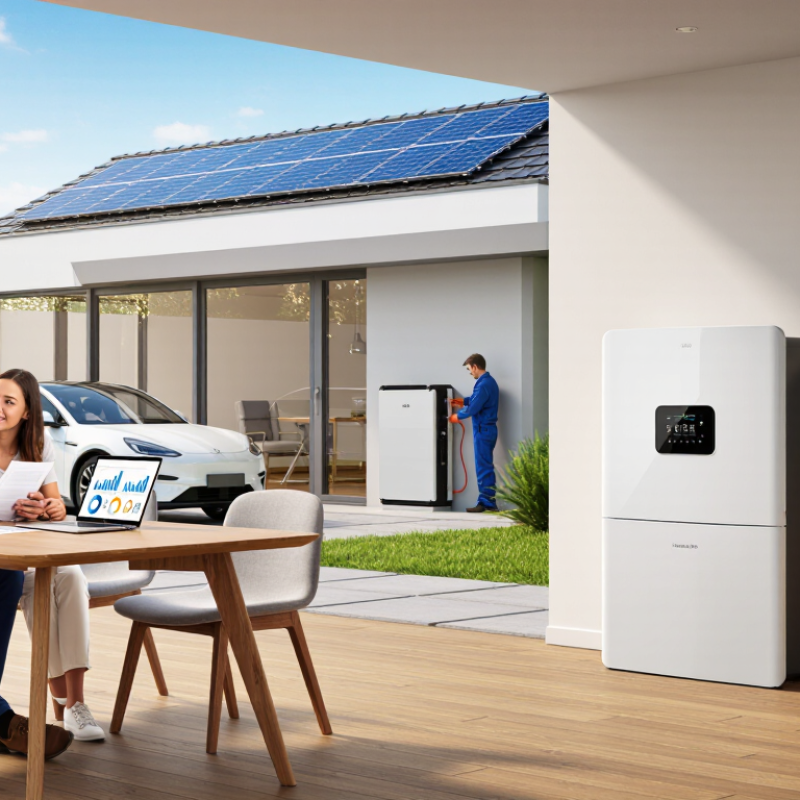
10 Tips for Choosing Home Energy Storage?

Define Household Loads with 24-Hour kWh Profiles and Peak-Demand Data

Choosing home energy storage starts with measurement, not battery capacity. A 24-hour load profile shows how much electricity your household uses each hour. Collect smart-meter or inverter readings at 15-minute intervals for at least two typical weeks. Include a weekday, weekend, hot day, and unusually cold day. Record kWh, not only monthly bills. A bill can hide short, expensive demand spikes.

Mark appliances that run together, such as an oven, heat pump, water heater, and electric vehicle charger. Calculate daily energy by summing each interval. Then identify the highest 15-minute or 30-minute demand, depending on your utility tariff. For example, a home may use 28 kWh daily but briefly reach 8 kW. That profile needs enough power for the spike, not merely a 28 kWh battery. Separate essential circuits from flexible loads. A refrigerator, lights, router, and medical equipment may need backup priority. An electric vehicle charger can often pause without affecting comfort.

My first spreadsheet estimate was too optimistic because it ignored standby consumption and winter heating. Leave room for conversion losses, battery reserve, and future household changes. Compare usable capacity with rated capacity. Ask for tested round-trip efficiency and continuous output data. Peak demand also changes when several motors start together. A professional electrician can verify circuit limits and safe installation requirements. Do not size from one perfect day. Use measured data and question every assumption.

10 Tips for Choosing Home Energy Storage: 24-Hour Household Load Profile

This representative household profile shows hourly energy use and estimated peak demand. The highest demand occurs during the evening cooking, lighting, and appliance period, which is important when selecting battery power and usable capacity.

Reading the chart: Total daily consumption is approximately 20.2 kWh, while the maximum observed demand is 4.1 kW at 19:00. A storage system should be sized using both daily energy requirements and the highest simultaneous load.

Size Storage for 80–90% Depth of Discharge and Required Backup Hours

Choosing home energy storage requires more than matching a battery to daily electricity use. Depth of discharge matters. A system rated for 10 kWh may not deliver 10 kWh repeatedly. Designing around 80–90% DoD protects usable capacity while limiting unnecessary cell stress. The U.S. Department of Energy notes that usable energy depends on operating limits, efficiency, and reserve settings. PNNL’s Energy Storage Cost and Performance Assessment 2022 reports typical lithium-ion round-trip efficiency near 85–95%. Real homes still lose energy through inverters, wiring, and temperature effects.

Backup hours should guide the calculation. List essential loads, not the entire house. A refrigerator, lights, internet equipment, and a medical device might average 1.5 kW. For eight hours, that requires 12 kWh of delivered energy. At 85% usable DoD and 90% system efficiency, the nominal battery size becomes about 15.7 kWh. Add capacity for aging, winter conditions, and unexpected demand. NREL’s Annual Technology Baseline highlights how storage performance and costs vary by duration and operating conditions. A load audit is more reliable than guesswork. I once underestimated startup power from a pump; the battery looked large on paper, yet the inverter tripped. That mistake still matters. Keep a reserve for storms, and verify whether the stated capacity is usable or merely rated.

Compare Lithium-Ion Systems at 85–95% Round-Trip Efficiency

Choosing a home battery begins with round-trip efficiency, not the advertised capacity. This figure measures energy retained after charging and discharging. A 10 kWh lithium-ion system operating at 85% delivers about 8.5 kWh. At 95%, it delivers about 9.5 kWh. That difference can affect evening heating, cooling, and appliance use.

The U.S. National Renewable Energy Laboratory’s 2024 Annual Technology Baseline models lithium-ion storage near the mid-80% range for round-trip efficiency. The U.S. Department of Energy’s Energy Storage Handbook also notes that inverter losses, battery temperature, standby demand, and operating conditions reduce real-world performance. Ask whether the quoted figure is AC-to-AC or DC-to-DC. AC-to-AC data better reflects a complete household installation.

Look beyond the headline number. Request measured efficiency at your expected load, not only laboratory conditions. A battery may perform differently during a cold winter night or a partly loaded cycle. Check usable capacity, degradation assumptions, and warranty limits together. Energy throughput matters. So does installation quality.

Some figures remain uncertain. Manufacturers may use different test methods, making direct comparisons imperfect. That deserves attention. Compare three written specifications: usable kilowatt-hours, guaranteed end-of-warranty capacity, and round-trip efficiency. A smaller system with 95% measured AC efficiency may waste less energy than a larger system rated at 85%. Also examine backup switching time and monthly standby consumption, because efficiency alone does not describe household value.

Check Inverter Ratings, 5–20 kWh Capacity, and Critical-Load Coverage

Tip: Start with the inverter rating, not the battery size. Check its continuous output and short-term surge capacity. A 5 kW inverter may run lights, refrigeration, and networking equipment comfortably. It may struggle when a pump or compressor starts. Read the specification sheet carefully. “Peak” power is not the same as steady power.

Tip: Match storage capacity to your critical loads. A 5 kWh battery can support essential lighting, Wi-Fi, medical equipment, and a refrigerator for several hours. A 10–20 kWh system may cover longer outages or heavier evening use. Usable capacity matters more than the advertised figure. Keep a written load list. Measure real consumption if possible. My first estimate was too optimistic because I ignored refrigerator startup cycles.

Tip: Define critical-load coverage before choosing the system. A dedicated backup panel can protect selected circuits instead of the entire home. This usually improves control and may reduce unnecessary capacity. Ask an experienced installer to calculate daily energy use, surge demand, and expected battery reserve. Also check charging speed during limited sunlight. A large battery is not automatically better. It can remain partly unused, which deserves honest reflection. Review the system’s monitoring data after installation, especially during the first month. Small corrections can prevent expensive assumptions.

Assess Safety, Warranties, Costs, and 70–80% End-of-Life Capacity

10 Tips for Choosing Home Energy Storage?

A safe home battery starts with more than a wall-mounted box. Check tested safety standards, enclosure ratings, ventilation needs, and protection against overheating. Ask who performs installation and what happens during a fault. Safety comes first. A quiet utility room, clear service access, and correct wiring matter every day. Do not rely on attractive specifications alone.

Warranty language deserves close attention. Look for coverage years, energy throughput, cycle limits, labor costs, and acceptable capacity loss. A ten-year warranty may include conditions that reduce its value. Ask whether the stated 70–80% end-of-life capacity is guaranteed at a defined temperature and usage pattern. The measurement should be clear. Vague promises create expensive arguments later.

Compare the full cost, not only the battery price. Include installation, electrical upgrades, monitoring fees, maintenance, and possible replacement parts. Round-trip efficiency also affects savings, especially when daily charging and discharging repeat for years. A system retaining 80% capacity may still serve essential loads, but its practical value depends on your household’s needs. I would also question my own assumptions: projected savings can look precise while electricity prices change. Request written test conditions, service response times, and realistic degradation examples before signing.

FAQS

What does depth of discharge mean for home battery sizing?

Depth of discharge shows how much stored energy can be used safely. Designing around 80–90% helps reduce cell stress.

How much battery capacity is needed for eight hours of backup?

If essential loads average 1.5 kW, eight hours requires 12 kWh delivered. Include discharge limits and system losses.

Why is the rated battery capacity not fully usable?

A battery rated at 10 kWh may deliver less repeatedly. Reserve settings, inverter losses, wiring, and temperature reduce usable energy.

How can I calculate a practical battery size?

Divide required delivered energy by usable discharge and system efficiency. For 12 kWh, 85% discharge, and 90% efficiency, size near 15.7 kWh.

Which household loads should receive backup power?

List essential circuits, such as refrigeration, lights, internet equipment, and medical equipment. Do not automatically include the entire home.

Why should inverter capacity be checked before battery capacity?

The inverter controls immediate power delivery. A 5 kW unit may handle lights and refrigeration, but struggle with pump startup.

What is the difference between continuous and surge inverter power?

Continuous power supports normal operation. Surge power handles short startup demands from compressors, pumps, or similar motors.

Is a 5–20 kWh battery suitable for every home?

No. A 5 kWh system may support essentials for several hours. A 10–20 kWh system can cover longer outages or heavier evening use.

How can unexpected demand affect backup performance?

Startup cycles can trip an inverter even when the battery seems large enough. My estimate was too optimistic. Measure real demand.

What should be reviewed after installation?

Check monitoring data during the first month. Review energy use, charging speed, reserve levels, and outage performance. Small corrections matter.

Conclusion

Choosing Home Energy Storage starts with understanding how your household uses electricity. Review a 24-hour energy profile to identify average consumption, peak demand, and essential appliances during an outage. Then estimate the required storage capacity based on backup hours, while allowing for an 80–90% depth of discharge to protect battery life. Lithium-ion systems are commonly evaluated by their round-trip efficiency, with approximately 85–95% indicating how much stored energy can be used after charging and discharging.

Also compare inverter power ratings, total capacity options from about 5 to 20 kWh, and the system’s ability to support critical loads. A well-rounded decision should include safety features, warranty terms, installation and operating costs, and expected performance over time. Check whether the battery can retain roughly 70–80% of its original capacity near the end of its service life. Balancing these factors helps create a practical, reliable, and cost-conscious energy plan.


Aria

Aria

Aria is a dedicated marketing professional with a deep passion for innovative strategies and a keen understanding of our company's product offerings. With a wealth of experience in the industry, Aria excels at crafting engaging content that highlights the unique features and benefits of our......