Engineered for extreme GCC climates, featuring advanced thermal management and robust OCPP integration.
Understanding the technical and environmental dynamics of the Kingdom of Bahrain's mobility transition.
Under the guidance of the Kingdom's Economic Development Board (EDB) and the Electricity & Water Authority (EWA), Bahrain is rapidly executing its National Energy Efficiency Action Plan (NEEAP). The deployment of robust public and private DC EV fast charging networks is a primary pillar in achieving carbon neutrality. The transition requires high-performance charging topologies capable of scaling alongside urban developments, commercial centers, and logistics corridors like the King Fahd Causeway expansion.
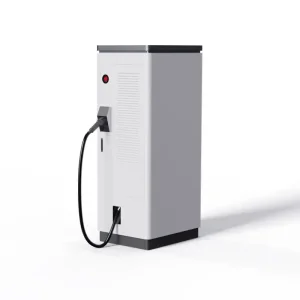
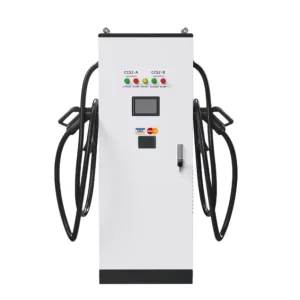
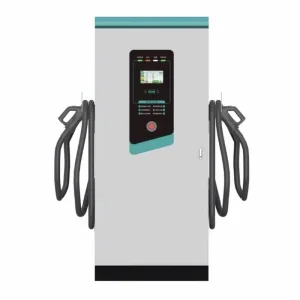
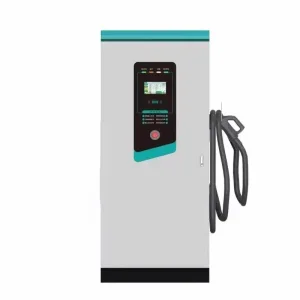
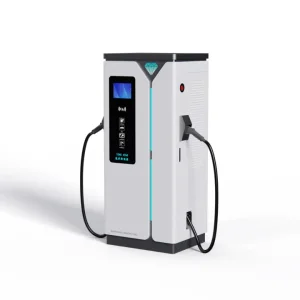
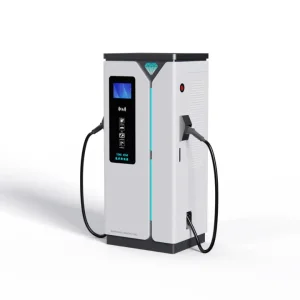
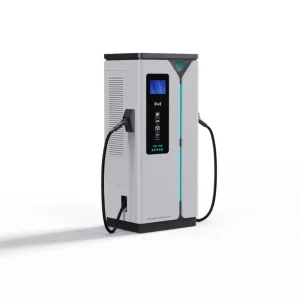
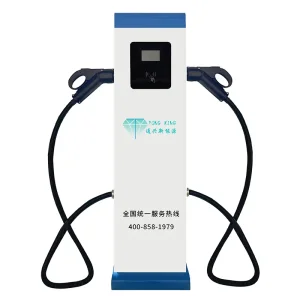
Our line of DC chargers from 60KW to 360KW serves as the backbone for public infrastructure hubs, commercial properties, and private fleet depots looking to deploy dependable EVSE (Electric Vehicle Supply Equipment) designed specifically for local grid characteristics and regional utility configurations.
Bahrain's ambient temperatures frequently exceed 50°C during summer, coupled with airborne dust, high salinity, and coastal humidity. These conditions trigger severe thermal derating and component degradation in standard charging units. Our charging solutions are built with:
A National High-Tech Enterprise pioneering smart charging solutions globally.
With 23 years of energy sector leadership, Tongxing specializes in the entire lifecycle of EVSE technology—from structural engineering and circuit topology optimization to software stack architecture. Our production lines feature 18 automated assembly systems and IoT-enabled quality gates to meet international safety and operational protocols.
Decoupling EV charging loads from Bahrain's national grid through integrated renewable storage configurations.
Integrated solar canopies capture high solar irradiance in Bahrain, converting sunlight directly to power the DC charging bus. This reduces peak-demand utility fees and provides clean energy directly to EVs.
By pairing lithium-ion battery banks (100kWh to 10MWh) with charging nodes, commercial operators can store low-cost energy during off-peak hours and discharge it during peak times, lowering demand-charge spikes.
AI-driven power management dynamically balances production from PV arrays, state-of-charge (SoC) in the batteries, and real-time charging loads from vehicles, ensuring high operational efficiency.
| Evaluation Indicator | Traditional Grid-Only Solution | Solar-Storage-Charging Integration | Operational Efficiency Improvement |
|---|---|---|---|
| PV Self-Consumption Rate | 50% | 85%+ | ↑ 70% increase in local use |
| Average System Electricity Cost | 0.85 USD / kWh | 0.62 USD / kWh | ↓ 27% cost reduction |
| Annual Carbon Footprint Savings | Baseline Emissions | 40% to 60% Reduction | Significantly improved ESG rating |
| Response time to local grid transients | < 50ms | ≤ 10ms | Alleviates distribution transformer strain |
Leveraging vertically integrated production to offer cost efficiency, quality control, and faster shipping timelines to Bahrain.
Our facilities are built on smart manufacturing models. From automated SMT patch placement for power-electronics controller boards to robotic chassis welding and assembly, automation ensures repeatability and high build quality. Real-time diagnostic data is captured for every sub-assembly during testing, establishing a fully traceable history for each product delivered to the Middle East.
Each unit undergoes 100% full-load burn-in testing under controlled high-temperature chambers, replicating desert environments to ensure that chargers arriving in Bahrain function reliably immediately upon installation.
With global supply chain systems, Tongxing secures high-grade semiconductor devices (such as Infineon IGBT modules and high-speed MCU chips) directly from manufacturers. Our dual-source procurement policy avoids supply delays. By maintaining robust stock levels of key modules, we support quick shipping to Bahrain ports (Port of Khalifa Bin Salman), significantly reducing lead times compared to standard industry averages.
Full compliance with regional grid authorities ensures hassle-free permitting and commissioning.
Our electrical designs adhere to the strict utility connection criteria set by Bahrain's Electricity & Water Authority (EWA). This includes low harmonic distortion (THD < 5%), active phase balancing, and rapid shutdown safeguards.
All charging terminals feature native OCPP 1.6J and OCPP 2.0J capability. We conduct thorough validation tests with major charging management software and localized payment gateways, supporting mobile wallet integrations.
Our commercial and industrial customers receive a 24-month hardware warranty along with direct access to our tier-3 engineering support team for installation, maintenance training, and firmware updates.
Answers to engineering and procurement questions for charging infrastructure deployment in Bahrain.
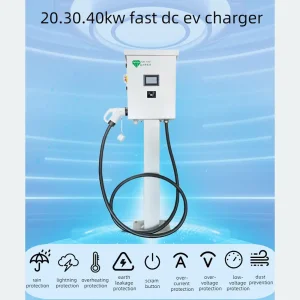
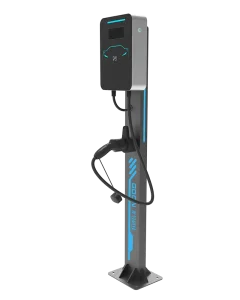
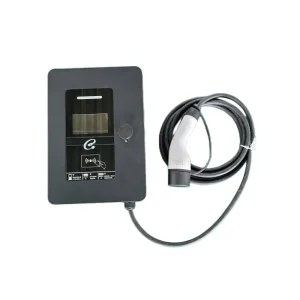
Fully certified AC and DC charging systems tailored to diverse installation requirements in Bahrain.
 Tongxing