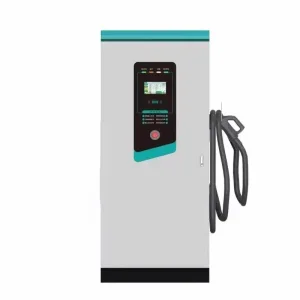
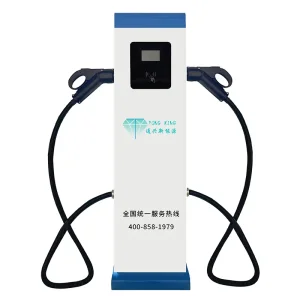
Energy Storage Battery Factories & Factory in Germany

Empowering the European Energiewende with High-Performance Lithium-Ion BESS Solutions & Industrial Smart Charging Infrastructure

The Strategic Landscape of Energy Storage in Germany

🇩🇪

The "Energiewende" Catalyst

Germany stands as the epicenter of Europe's energy transition. With the phased closure of nuclear and coal plants, the stability of the German grid now relies heavily on Battery Energy Storage Systems (BESS). Factories in regions like North Rhine-Westphalia and Bavaria are shifting focus toward decentralised storage to support high industrial power demands.

🏗️

Industrial Storage Clusters

From Berlin to Munich, German SMEs (Mittelstand) are increasingly seeking "Energy Storage Battery Factory" partnerships that offer more than just hardware. The current trend prioritizes integration with Siemens-based grid controls, adherence to VDE-AR-N 4105 standards, and fire safety protocols (VDS).

Peak Shaving Demand

German industrial electricity prices are among the highest in Europe. Local factories are implementing large-scale LFP (Lithium Iron Phosphate) systems to mitigate peak-load costs, creating a massive procurement gap for tier-1 battery suppliers who can meet German precision requirements.
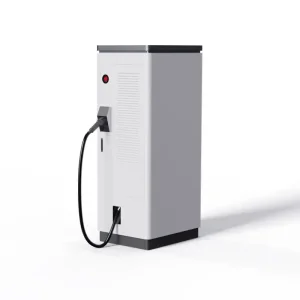
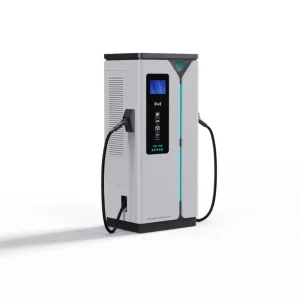
TONGXING: Pioneering Smart Energy Solutions

As a certified national high-tech enterprise with 23 years of expertise, Tongxing bridges the gap between Chinese Manufacturing Efficiency and German Quality Standards. We specialize in R&D, production, and global distribution of innovative EV charging and energy storage systems.

72,000m² Production Base

Equipped with 18 automated assembly lines and IoT-enabled quality control systems, achieving a 95% automation rate to ensure consistency in every battery cell and circuit board.

Full-Stack R&D

Our 200-strong workforce includes specialists in power electronics, embedded systems, and OCPP 2.0 protocol development, ensuring our hardware is future-proof.

Resilience & Efficiency

IP55/IP65 certification and temperature tolerance from -35°C to 75°C. We provide the thermal management stability required for Germany's varying seasonal climates.

Global Energy Storage Dynamics: China's Efficiency Advantage

Feature European Local Factory Tongxing (China-Germany Synergy) Strategic Value
Supply Chain Speed 6-12 Months Lead Time 4-8 Weeks Lead Time Rapid Project Deployment
Cost Structure High CAPEX due to labor Optimized via vertical integration 25-40% Better ROI
Tech Iteration Conservative cycles Bi-annual firmware/hardware updates State-of-the-art LFP Safety
Certification Local CE/VDE only Global: CE, UL, TUV, RoHS, IEC Export-ready for global markets

Localized Application Scenarios in Germany

🏠

Residential Energy Independence

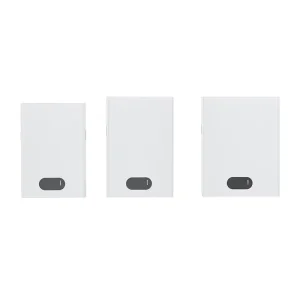
In Germany, "Mieterstrom" and private PV systems are surging. Our 5kWh-15kWh Powerwall units enable German households to save up to €3,000 annually by storing solar energy for night use and EV charging.

🏢

Commercial Peak Shaving

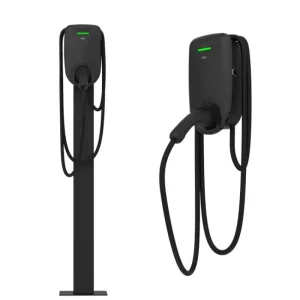
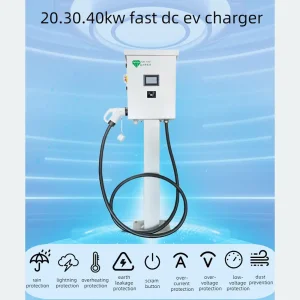
Logistics hubs in Frankfurt and Hamburg use our 120kW-960kW ultra-fast chargers integrated with storage to avoid high-grid tariffs during peak hours, reducing costs by 27%.

🚜

Rural & Off-Grid Solutions

For remote agricultural sites in Brandenburg or the Black Forest, our containerized ESS solutions provide 72-hour autonomous power, ensuring operational continuity without expensive grid extensions.

The Future of Battery Storage: 2024-2030 Trends

1. Solid-State Evolution: While LFP remains the king of ROI, the transition toward semi-solid state batteries is beginning. Our R&D is already testing higher energy density modules for the German automotive market.

2. V2G (Vehicle-to-Grid): Bi-directional charging is no longer a concept. Our new DC chargers support V2G, allowing EV fleets to act as mobile batteries for the German grid.

3. AI-Driven BMS: Advanced algorithms now predict cell degradation with 98% accuracy. This "Predictive Maintenance" is a key requirement for German industrial procurement teams.

4. Circular Economy: "Second Life" battery applications are becoming mandatory. We design our modules for easy disassembly and recycling, complying with the EU Battery Passport regulations.

Download Full Industry White Paper

Frequently Asked Questions (FAQ)

Are your batteries compatible with German grid regulations?

Yes. Our systems are designed to comply with VDE-AR-N 4105 and VDE-AR-E 2510-50, which are the primary safety and grid connection standards in Germany.

What is the typical ROI for a commercial ESS in Germany?

Depending on your peak usage and local subsidies (like KfW 442), most industrial clients see a full payback within 3.8 to 5.5 years.

How do you handle after-sales service for German customers?

We offer 24-month warranties with local European technical support partners and remote cloud-based monitoring to resolve 90% of software issues instantly.

What is the cycle life of your LFP cells?

Our high-voltage cascaded systems offer ≥6,000 cycles at 80% Depth of Discharge (DOD), significantly outperforming conventional lead-acid or standard ternary batteries.